Repair Guide · 10 min read
Cracked Alloy From Pothole Damage: Repair, Replace or Claim?
A cracked alloy from pothole impact is one of the most expensive tyre-related bills in the UK. You hit a pothole, the tyre went flat instantly, and now the alloy is buckled — maybe cracked. This guide explains how to tell repairable from scrap, what a UK refurb realistically costs in 2026, and the paperwork you need to claim the bill from the council or TfL.
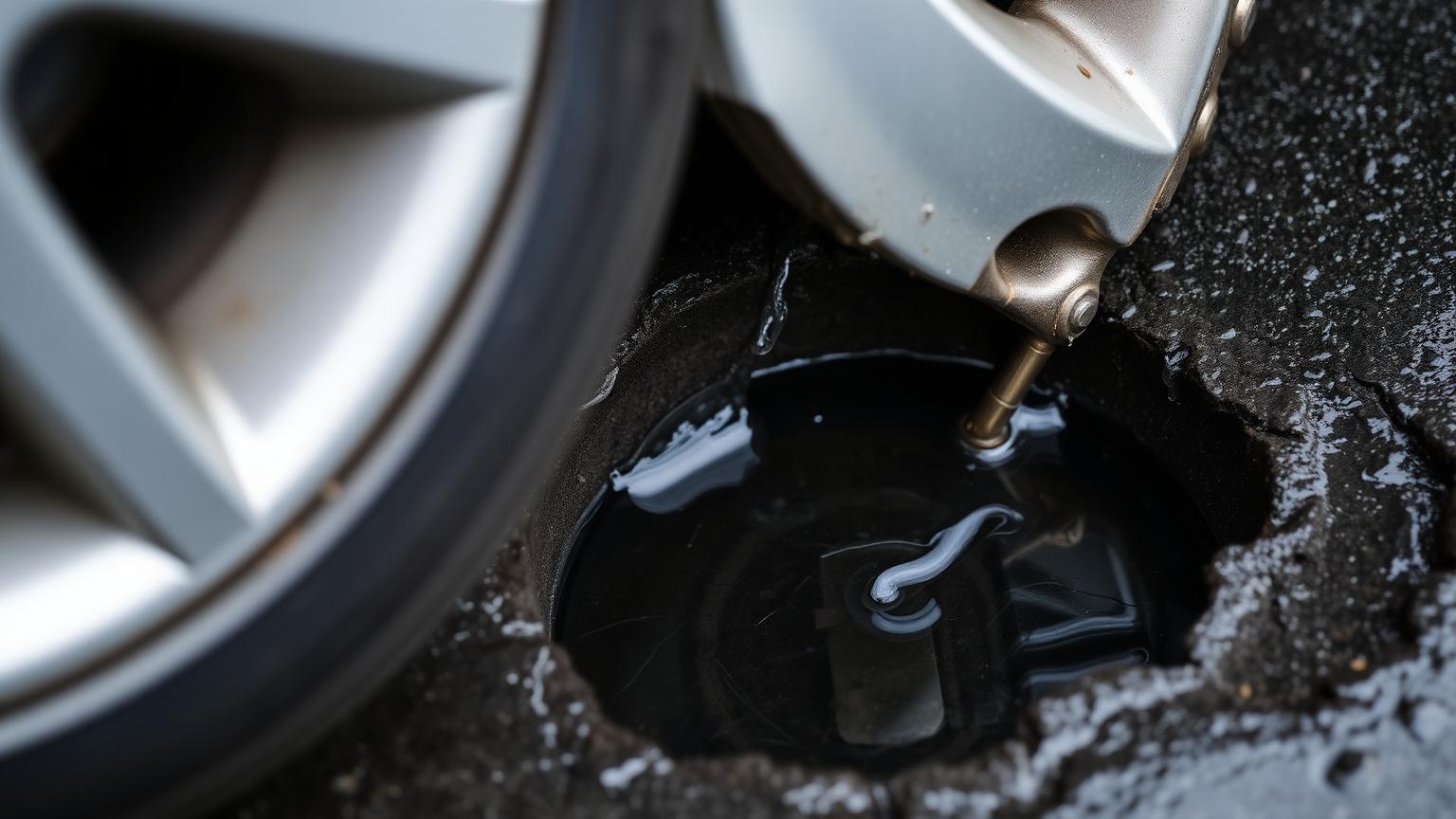
Cracked alloy from pothole damage: is it actually cracked?
A pothole hit produces three levels of alloy damage. Getting the diagnosis right is the difference between a £70 refurb and a £400 replacement — and if the tyre took the hit too, check our tyre sidewall damage guide.
- Kerb rash — cosmetic scuffing on the outer face. No structural impact. £60–£120 refurb.
- Buckle — the rim edge is pushed inward, tyre won't seal fully, you feel a vibration at 40+ mph. Repairable in most cases by a specialist "wheel straightener" for £70–£140 per wheel.
- Crack — a visible hairline (usually on the inner rim, sometimes across a spoke). Air leaks slowly, or the tyre won't hold at all. Structural. See below.
To find a crack: with the wheel off, clean the inside of the rim with brake cleaner and shine a torch along the barrel. Any dark hairline that flexes when the wheel is stressed is a crack. On the front face, look at the paint — cracks often show as a wrinkle in the lacquer before they show in the metal.
Can a cracked alloy from a pothole be welded?
Sometimes — but it's specialist work and only certain cracks qualify. TIG welding on a cast aluminium alloy requires the wheel to be stripped, pre-heated, welded, re-machined and re-balanced. A competent specialist can do it for £90–£180 per wheel, and a properly welded wheel is safe for normal road use.
Need a quote in 30 seconds?Get an instant price →But there are hard limits. Cracks that run through a bolt hole, cracks on the spoke or hub face, and cracks on forged or flow-formed wheels (BMW M, Audi RS, most performance/EV OEM) are usually condemned. Repair welding a load-bearing crack on a forged wheel changes its metallurgy in ways nobody sensible will sign off on.
When you must replace the wheel
- Multiple cracks or a single crack longer than about 40 mm.
- Any crack on the inner face that intersects the bead seat (the tyre won't seal).
- Any crack on a forged wheel unless the manufacturer or a specialist explicitly clears it.
- The wheel is out-of-round by more than 1.5 mm after straightening — the vibration never fully goes.
- The centre bore is oval or the bolt-hole seats are elongated (rare but happens on very hard impacts).
Replacement cost varies wildly. OEM alloys for common cars (Golf, Focus, Corsa, 3-Series) run £180–£350 used, £280–£550 new. Performance and EV OEM wheels (M3, RS6, Model 3 Performance) can hit £800–£1,600 each. You may also be able to recover the cost with a pothole damage claim. Aftermarket replicas are cheaper but check UK TÜV / JWL / VIA certification — anything without it is unsafe and, in some insurance events, uninsured.
The straightening + refurb combo
For a buckled-but-not-cracked wheel, the best-value fix is often a combined straightening and refurb — hydraulic straightening restores the profile, then the wheel is sanded, primed, painted and lacquered so you can't see it ever happened. Typical UK price: £110–£180 per wheel, 3–5 working day turnaround. Cheaper than a replacement and, on a common OEM design, indistinguishable.
Nail in the tread?Book a mobile repair →Getting a mobile fitter to look at it
This is where a lot of drivers get stuck. Mobile tyre fitters don't repair alloys — they fit tyres. But they will:
- Come to the roadside or your driveway and get a new tyre on so you can drive again.
- Inspect the wheel visually and tell you honestly whether it's roadworthy short-term.
- Warn you if the wheel won't hold air — in which case they won't refit a tyre to it, and you'll need a spare or recovery.
- Recommend a local straightening or refurb specialist and often drop the wheel off for you.
Claiming the cost back from the council or TfL
UK councils, TfL, National Highways and Transport Scotland are all liable for pothole damage — if they were on notice of the defect and failed to fix it in a reasonable time. The claim rejection rate is high (roughly 40–70% depending on authority), but the ones that succeed usually share the same paperwork.
- Photograph the pothole immediately — with a coin or shoe in the frame for scale, and a wider shot showing road context.
- Photograph the damage — tyre, wheel, any suspension impact.
- Note the exact location — GPS coordinates or a what3words. "Near the traffic lights" won't fly.
- Report the pothole via gov.uk/report-pothole for England, TfL for the Red Route network, or the council's website for local roads.
- Get itemised receipts for the tyre, wheel repair or replacement, wheel alignment, and any recovery fees.
- Submit the claim in writing within 14 days. Most authorities have an online damage claim form; if not, write to the highways department by recorded delivery.
Under Section 58 of the Highways Act 1980, the authority can defend a claim if it can prove it had a reasonable inspection regime and no prior knowledge of the defect. That's why photos, dates and prior reports (yours or anyone else's — searchable via FixMyStreet) matter more than anything else.
Will your insurance cover it?
Yes, comprehensive cover almost always includes pothole damage, but two things make most drivers skip the claim:
Stuck on the roadside?Send us your postcode →- Your excess (typically £250–£500) is often close to the total repair cost.
- A claim usually costs you your No Claims Discount, worth £150–£400/year for 3–5 years — a much bigger long-term hit than the repair itself.
For anything under about £400, most drivers pay out of pocket and try the council claim in parallel. Above that, factor in the NCD hit before you file.
Preventing the next one
- Increase following distance in wet weather — you can only avoid the pothole you can see.
- Check tyre pressures monthly. Under-inflated tyres offer far less protection to the rim in a hit.
- On rough routes, consider a higher-profile tyre size if your car allows — 45 profile has twice the sidewall cushion of a 30.
- Report every pothole you drive over, even if you're fine. That's what puts the council "on notice" for the next driver's claim.
Frequently asked questions
Can you drive on a cracked alloy?
Only to reach a safe stopping point. A cracked rim can suddenly release the tyre bead — treat it as a wheel that will fail without warning and get a mobile fitter or recovery.
How much does it cost to repair a cracked alloy in the UK?
£90–£180 per wheel for TIG weld and refurb, if the crack is repairable. Non-repairable cracks require replacement — £280–£550 for typical OEM, more for performance or EV wheels.
Will the council pay for pothole damage to my alloy?
Sometimes. You need dated photos, GPS location, itemised receipts and a written claim within 14 days. Success rates are 30–60% depending on prior reports and the authority's inspection record.
Should I claim on my insurance for pothole damage?
Usually only if the bill exceeds £400 or so, because you'll lose your No Claims Discount for 3–5 years. Under that, pay out of pocket and pursue the council claim in parallel.
Need help right now?
Send your postcode and tyre size (e.g. 225/45 R17) and we'll dispatch the closest mobile fitter.
Get a mobile fitter →Mobile tyre fitting in your area
Book a mobile tyre fitter