Safety · 9 min read
Tyre Sidewall Damage Guide: What's Repairable and What's a Replace-Now
This tyre sidewall damage guide covers the one category of tyre problem where there is very little grey area — including what a replacement typically costs. The tread you can repair. The sidewall you almost always can't. Here's the plain-English rule set — what to look for, what BS AU 159 (the UK repair standard) says, and when you're driving on a bomb.
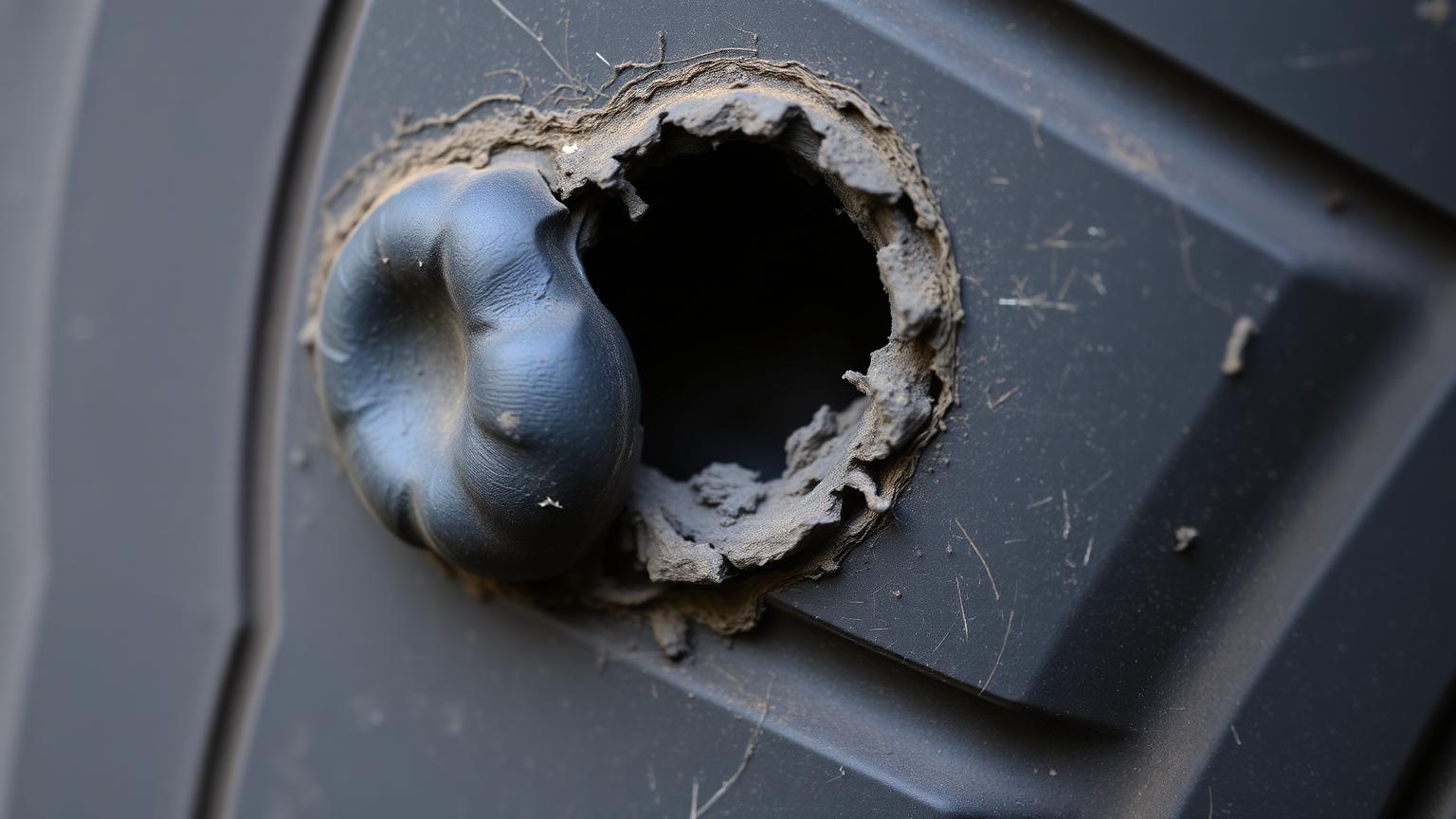
Tyre sidewall damage guide: why the sidewall differs from the tread
The tread is a rigid, reinforced structure — layers of steel and polyester belts under a thick rubber cap, all backed against a road that supports it. Damage to the tread has geometry on its side: the belts contain and reinforce a small puncture, and a proper mushroom-plug patch bonds directly to the inner liner.
The sidewall has none of that. It's a thin, flexible structure of woven cords in rubber, designed to flex thousands of times a minute as the tyre rotates and absorbs road impacts. There's no backing surface, no rigid cap. Any repair patch you glue to it will flex too — until it separates. That's why the British Standard, tyre manufacturers, and every reputable fitter say the same thing: sidewall damage means a new tyre.
Flat tyre right now?Message a mobile fitter →The BS AU 159 rule (what UK fitters actually follow)
British Standard BS AU 159 defines the "minor repair area" of a tyre — the crown of the tread across the middle 75% of the tread width. Damage inside that area, up to 6mm diameter, on a tyre with sufficient remaining tread and no other issues, can be plug-patch repaired from inside.
Damage outside that area — including the shoulder and any part of the sidewall — is non-repairable, full stop. Any fitter offering to plug a sidewall for you is breaching the standard and gambling with your life. Walk out.
Need a quote in 30 seconds?Get an instant price →Category 1: Sidewall bulges (replace now, don't drive)
A bulge or blister on the sidewall means the internal cords have broken — usually from a pothole strike or kerb hit. Air pressure is now being held back by nothing but the outer rubber. Bulges rupture with no warning, often at motorway speed, and the failure is violent.
If you see a bulge, don't drive to the fitter. Not to work, not around the corner. Get the car recovered, or call a mobile fitter to your location.
Stuck on the roadside?Send us your postcode →Why bulges rupture without warning
A slow puncture gives you hours or days of notice. Worn tread gives you months. A sidewall bulge gives you nothing. The outer rubber is elastic and can hold pressure for an hour, a day, sometimes a couple of weeks — but the failure, when it comes, is a sudden violent tear. No whistle, no smell, no gradual softening.
A front-tyre sidewall rupture at 70 mph on a heavy car can pull the steering hard in the failed tyre's direction; overcorrect and you're across two lanes in under a second.
Nail in the tread?Book a mobile repair →What causes a bulge
- Pothole strikes. The single most common cause. Deep-edged potholes above 20 mph can snap sidewall cords, especially at low pressures.
- Kerb hits. A hard mount over a kerb pinches the sidewall between the alloy rim and the kerb edge.
- Speed cushions taken at speed. The corners can catch and pinch the sidewall.
- Under-inflation. A tyre 20% low at motorway speed builds enough sidewall heat to fail the cords with no impact at all. See our pressure guide.
- Manufacturing defect. Rare, and usually shows up in the first few hundred miles.
- Overloading. Van and 4×4 tyres run over their load rating can bulge without any impact.
Can a bulged tyre be repaired?
No, under any circumstances. BS AU 159 forbids any sidewall repair. Any "fitter" who offers to patch, plug, seal or grind it flat is lying. The tyre is scrap.
One tyre or two?
- Tread depth of the surviving tyre on that axle. More than about 2mm difference from the new one and replacing in pairs is strongly recommended.
- 4WD/AWD cars. Some systems (Subaru, some Audi Quattro variants) require all four within 3mm or the differential wears. Check the handbook.
- Age. If both were fitted together and are over 5 years old, replace both.
How to prevent bulges
- Keep pressures correct — under-inflation is the leading contributor to sidewall failure.
- Slow down over potholes. Braking through one is worse than rolling through it — weight transfers forward and loads the front tyre harder.
- Take kerbs slowly and at 90° when parking; angling into them at speed is what pinches the sidewall.
- Watch load ratings if you tow or run a heavy van.
- Get 4-wheel alignment checked after significant impacts. See our alignment guide.
Claiming for pothole damage
If the bulge came from a specific pothole, you can claim from the local council or National Highways — see our pothole claim guide. Photograph the pothole, note the location, and keep the replacement invoice. Check the alloy too: pothole hits often bend the rim — see our cracked alloy guide.
Category 2: Sidewall cuts and gouges (usually replace)
Anything sharp on the road — kerb edges, broken glass, metal debris — can gouge the sidewall. The rule of thumb: if the cut goes deep enough to expose the cord layer (usually a lighter beige or white material under the black rubber), the tyre is scrap. If it's a superficial rubber scuff with no cord visible, the tyre is usually fine to keep.
Need a quote in 30 seconds?Get an instant price →The test: press either side of the cut with your thumbs. If any air escapes or the cut opens to reveal cord, it's a replace.
Category 3: Kerb rash, sidewall abrasion and replacement cost
Cosmetic kerb rash on the sidewall — the fine scuffing from parallel-parking against a kerb — is rarely structural. The rubber is soft on the outer surface, and light scuffing just removes a bit of that surface layer without touching the cords underneath. Ugly, but not dangerous.
Stuck on the roadside?Send us your postcode →The line to worry about: if the rash goes deep enough to leave a raised lip or expose lighter-coloured cord, treat it as a gouge (Category 2). Also inspect the alloy — hard kerb hits often damage both.
Category 4: Sidewall cracking (age or ozone)
Fine parallel lines running around the sidewall are the hallmark of aged rubber. Ozone in normal air combined with UV exposure breaks down the surface compound, causing the crazing. If the cracks are surface-only, monitor. If any crack exceeds 2mm in depth or you can see cord through it, replace. Sidewall cracking is a classic indicator that all four tyres are due for replacement — the whole set has aged together. See our tyre age guide.
Nail in the tread?Book a mobile repair →Category 5: Impact ruptures (replace now, don't drive)
Sometimes a pothole splits the sidewall clean open — a slit or star-shaped tear. The tyre may still hold air for a while as the internal liner keeps things together, but it's not going to last. Impact ruptures are non-repairable and unsafe. Recover or mobile-fit only, never drive.
The specific case: nail or screw in the sidewall
It happens rarely because sidewalls don't usually contact debris on the road, but it does happen (bricks in the road, workshop screws in the car park). Any puncturing object in the sidewall means the tyre is scrap, even if the object is still in place and holding air. Don't remove it — recover the car or call a mobile fitter.
How to inspect your own sidewalls
- Turn the steering to full lock so each front tyre swings out — this exposes both the outer and (a lot of) the inner sidewall.
- Use a phone torch. Sidewall damage often hides in the shadow of the wheel arch.
- Run your hand slowly around the whole sidewall — feel for bulges, ridges, or raised areas. Your fingertips find these before your eyes do.
- Look at the shoulder — the transition from sidewall to tread. Damage often starts here after a kerb hit.
- Repeat on the inside sidewall — this is where you'll find damage from potholes and mid-road debris. It's the one most drivers never check.
Insurance and warranty
Comprehensive car insurance sometimes covers pothole and vandalism damage to tyres, but most policies exclude tyres by default. Check for a "tyre and alloy" add-on if you commute on poor roads. Manufacturer tyre warranties cover manufacturing defects only, not impact or road-hazard damage. Some premium tyres (Michelin, Continental) sell a road-hazard warranty at time of purchase for around 3–5% of the tyre price — worth considering for expensive fitments.
TL;DR
- Bulge = broken internal cords, air held back by rubber only. Never repairable, never drive on it.
- Cut or gouge exposing cord = replace. Superficial scuff = usually fine.
- Kerb rash = cosmetic unless there's a raised lip or visible cord.
- Cracking deeper than 2mm = replace, and check the other three.
- Impact rupture or anything sharp embedded in the sidewall = recovery or mobile fit, don't drive.
Frequently asked questions
Can a sidewall puncture be repaired?
No. British Standard BS AU 159 restricts repairs to the middle 75% of the tread. Sidewall damage of any kind means the tyre is scrap.
Is a bulge on the sidewall dangerous?
Yes — a bulge means the internal cords have broken and only the outer rubber is holding pressure. Bulges rupture without warning, often at motorway speed. Recover the car; don't drive on it.
Can a tyre bulge be repaired?
No. BS AU 159 forbids any sidewall repair, so a bulged tyre must be replaced.
How long can I drive on a tyre with a bulge?
You shouldn't drive on it at all. There's no safe distance or speed — the failure mode is a sudden rupture with no warning.
Do I need to replace both tyres if one has a bulge?
Always replace the bulged tyre. Replace the pair if the other tyre has significantly less tread, if you have an AWD car with matched-tyre requirements, or if both are over 5 years old.
What causes a tyre bulge?
Pothole strikes, kerb hits, speed cushions taken at speed, running under-inflated at motorway speed, overloading, and — rarely — a manufacturing defect.
Is kerb rash on the sidewall dangerous?
Superficial scuffing that only affects the outer rubber is cosmetic. Damage deep enough to expose the cord layer or leave a raised lip is a replace.
Are cracks on my sidewall dangerous?
Fine surface crazing is age-related and worth monitoring; cracks deeper than 2mm or that expose cord mean replace. Widespread crazing usually indicates the whole set is due.
Need help right now?
Send your postcode and tyre size (e.g. 225/45 R17) and we'll dispatch the closest mobile fitter.
Get a mobile fitter →Mobile tyre fitting in your area
Book a mobile tyre fitter